

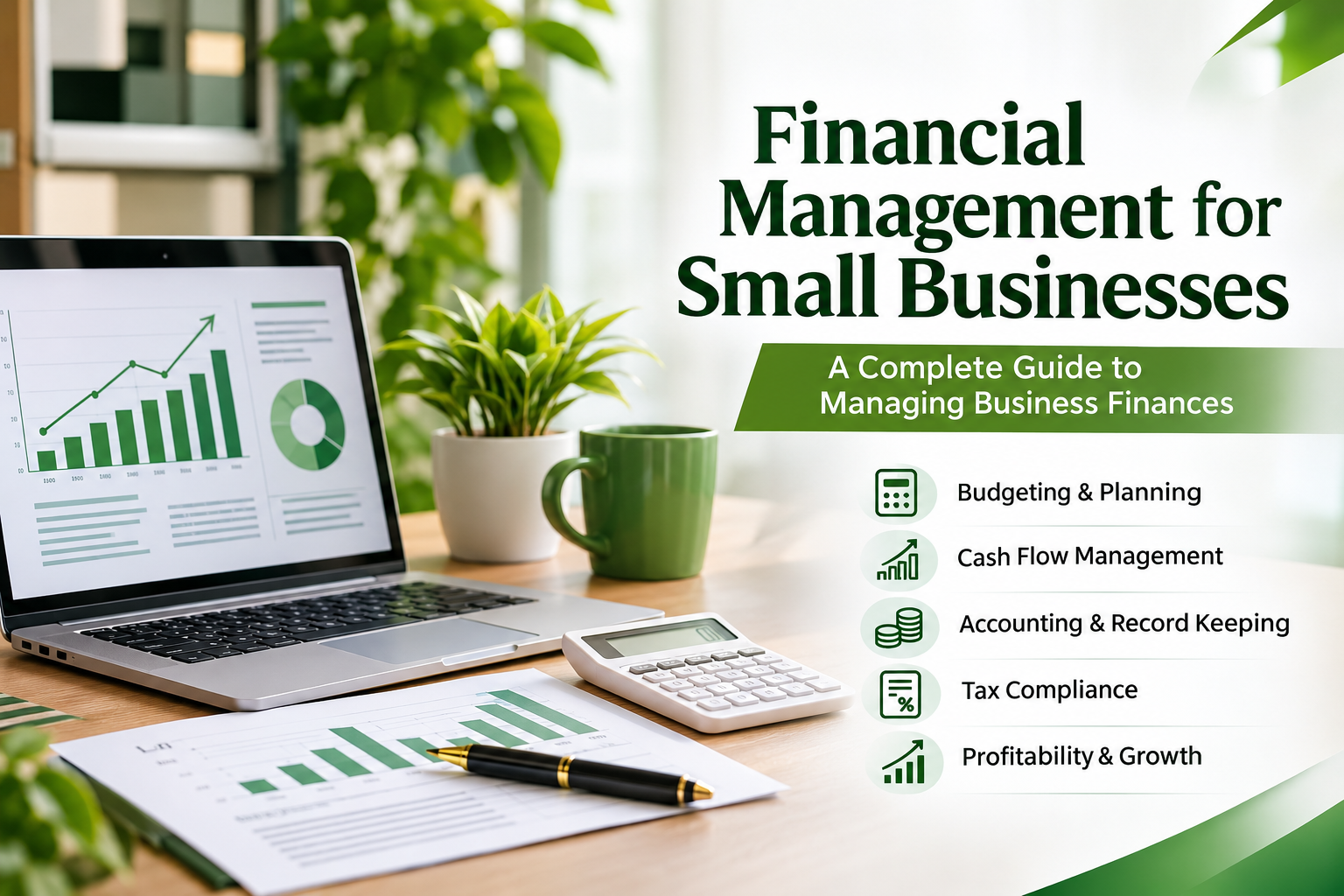
Running a small business involves more than selling products, attracting customers, and generating revenue. Behind every successful business is a strong financial management system that helps owners understand their income, control expenses, manage cash flow, and make informed decisions.
Many small businesses struggle not because they lack customers or good products, but because they do not manage their finances effectively. Delayed payments, unnecessary expenses, poor budgeting, inaccurate accounting records, and unexpected financial challenges can affect business growth.
This is where Financial Management for Small Businesses becomes essential. It provides a structured approach to managing business money, planning expenses, monitoring financial performance, and preparing for future opportunities.
Whether you operate a retail shop, service-based company, startup, manufacturing business, or consultancy, understanding financial management can help you maintain stability and achieve long-term success.
In this guide, we will explore the importance of financial management, budgeting techniques, cash flow management, accounting practices, financial planning strategies, and common financial mistakes that small business owners should avoid.
What Is Financial Management for Small Businesses?
Financial management refers to the process of planning, organising, monitoring, and controlling the financial resources of a business.
For small businesses, it means ensuring that the money earned is used effectively to support daily operations, pay employees, manage expenses, invest in growth, and maintain profitability.
It involves several important activities, including:
-
Preparing and managing business budgets.
-
Monitoring income and expenses.
-
Maintaining accurate accounting records.
-
Managing cash flow.
-
Planning business investments.
-
Controlling operational costs.
-
Managing loans and financial obligations.
-
Preparing financial statements.
-
Planning for taxes and regulatory requirements.
Effective financial management helps business owners understand where their money comes from, where it goes, and how it contributes to business performance.
For example, a small retail business may generate good monthly sales but still experience financial difficulties because of high inventory costs, unpaid customer invoices, or unnecessary operational expenses.
By regularly reviewing financial information, the owner can identify these problems and take corrective action before they become serious.
Why Is Financial Management Important for Small Businesses?
Financial management plays an important role in maintaining business stability. It helps owners make decisions based on actual financial performance instead of assumptions.
Here are some major reasons why businesses should prioritise financial management.
1. Better Control Over Business Expenses
Every business has regular expenses, such as rent, employee salaries, electricity, transportation, inventory purchases, marketing, and maintenance.
Without proper expense monitoring, small costs can gradually become significant financial burdens.
Maintaining an expense record helps business owners identify unnecessary spending and understand which activities require the most money.
For example, if a business spends a large amount on marketing but receives very few customers through those campaigns, the owner can review the strategy and redirect the budget towards more effective channels.
2. Improved Cash Flow Management
Cash flow represents the movement of money into and out of a business.
A company may generate high revenue but still face financial difficulties if customers delay payments or expenses become due before payments are received.
Proper cash flow management ensures that sufficient money is available to meet daily operational requirements.
It helps businesses:
-
Pay suppliers on time.
-
Manage employee salaries.
-
Cover monthly operating expenses.
-
Handle unexpected costs.
-
Avoid unnecessary borrowing.
3. Supports Better Business Decisions
Financial statements provide useful information about business performance.
By analysing revenue, expenses, assets, liabilities, and profits, business owners can identify opportunities and risks.
For example, before opening a new branch, a business should evaluate its existing profitability, available cash, expected investment, and future operating expenses.
This financial information helps owners make realistic expansion decisions.
4. Helps Maintain Profitability
Generating revenue does not automatically mean a business is profitable.
Profitability depends on how effectively a company manages its expenses and resources.
Regular financial reviews help identify activities that generate better returns and areas where costs need to be reduced.
5. Supports Long-Term Business Growth
Business expansion requires financial preparation.
Whether a company plans to purchase equipment, hire employees, introduce new products, or enter a new market, financial planning helps estimate the required investment.
A well-managed financial system creates a stronger foundation for sustainable growth.
10 Essential Financial Management Strategies for Small Businesses
Developing a reliable financial system does not always require complicated software or a large finance department. Small businesses can begin with simple practices and gradually improve their processes.
The following strategies can help establish better financial control.
1. Create a Realistic Business Budget
A business budget is a financial plan that estimates expected income and expenses over a particular period.
It helps owners understand how much money they can spend and how much they should reserve for future requirements.
A practical budget should include:
-
Expected monthly revenue.
-
Employee salaries and benefits.
-
Rent and utility payments.
-
Inventory and raw material costs.
-
Marketing and advertising expenses.
-
Transportation and logistics.
-
Taxes and statutory payments.
-
Emergency savings.
For example, a small business expecting monthly revenue of ₹5,00,000 should prepare an expense plan based on its operating requirements rather than spending according to available bank balances.
Review the budget every month and compare actual spending with planned spending.
If expenses are consistently higher than expected, identify the reasons and adjust the budget.
2. Maintain Accurate Accounting Records
Accounting records help businesses understand their financial position.
Every financial transaction should be recorded properly, including sales, purchases, payments, receipts, salaries, loans, and other business expenses.
Accurate records make it easier to prepare financial statements, calculate profits, monitor outstanding payments, and meet tax-related requirements.
Small businesses should maintain:
-
Sales invoices.
-
Purchase invoices.
-
Bank statements.
-
Payment receipts.
-
Expense records.
-
Payroll information.
-
Loan and repayment details.
-
Tax-related documents.
Using accounting software can reduce manual errors and make financial reporting more efficient.
3. Monitor Cash Flow Regularly
Cash flow should be reviewed frequently because it directly affects a business's ability to operate.
A simple cash flow statement helps owners track the money received and paid during a specific period.
Businesses should pay attention to three areas:
Operating activities: Money received from customers and payments made for everyday business operations.
Investing activities: Money spent on equipment, property, technology, and other long-term assets.
Financing activities: Money received through loans, investments, and other financing arrangements, including repayments.
Small businesses should prepare short-term cash flow forecasts to identify possible shortages before they occur.
4. Separate Personal and Business Finances
One common mistake among small business owners is using the same bank account for personal and business transactions.
This creates confusion when calculating business income, expenses, and profits.
Maintaining separate accounts offers several advantages:
-
Easier financial tracking.
-
Clearer accounting records.
-
Better expense monitoring.
-
Simplified tax preparation.
-
Improved financial reporting.
Business owners should establish a clear system for taking personal withdrawals or receiving salaries from the business.
This makes financial records more transparent and easier to manage.
5. Control Unnecessary Expenses
Reducing unnecessary expenses is one of the simplest ways to improve business profitability.
However, cost reduction should not affect product quality, customer satisfaction, or essential business operations.
Business owners can review:
-
Software subscriptions that are no longer required.
-
Unused office space or equipment.
-
High transportation costs.
-
Excessive inventory purchases.
-
Ineffective advertising campaigns.
-
Repeated administrative expenses.
Regular expense reviews help businesses use their financial resources more efficiently.
6. Prepare for Tax Obligations
Tax planning is an important part of financial management for businesses operating in India.
Small businesses should understand the tax obligations applicable to their business structure, turnover, activities, and transactions.
Depending on eligibility and applicability, these may include:
-
Goods and Services Tax (GST).
-
Income tax.
-
Tax Deducted at Source (TDS).
-
Advance tax.
-
Tax audit requirements.
-
Applicable statutory filings.
Maintaining organised records and monitoring filing deadlines can reduce the risk of penalties and compliance issues.
Businesses should consult qualified tax professionals to understand their specific obligations and applicable exemptions.
7. Manage Business Debt Carefully
Loans can help businesses purchase equipment, improve infrastructure, expand operations, or manage temporary financial requirements.
However, excessive borrowing can create repayment pressure.
Before taking a loan, business owners should evaluate:
-
Interest rates.
-
Processing fees.
-
Repayment schedules.
-
Loan tenure.
-
Monthly cash flow.
-
Expected return on investment.
Borrowing should be connected to a clear business purpose and a realistic repayment plan.
8. Build an Emergency Fund
Unexpected situations can affect business operations at any time.
Equipment breakdowns, delayed customer payments, market changes, and sudden increases in operating costs can create financial pressure.
An emergency reserve helps businesses manage these situations without immediately depending on loans.
The required amount depends on the business model, operating expenses, and financial risk.
Many businesses aim to maintain a reserve equivalent to several months of essential operating expenses, building it gradually according to their financial capacity.
9. Use Financial Management Software
Technology can make accounting and financial reporting easier for small businesses.
Accounting software helps organise transactions, generate invoices, monitor expenses, and prepare financial reports.
Common options used by businesses include TallyPrime, Zoho Books, and other accounting platforms.
The right software depends on the size of the business, transaction volume, reporting requirements, and budget.
Businesses should also ensure that financial information is backed up and access is restricted to authorised users.
10. Review Financial Performance Every Month
Financial management should be an ongoing activity rather than something businesses perform only during tax season.
Monthly financial reviews help owners understand whether the business is achieving its financial goals.
Important indicators to review include:
-
Total monthly revenue.
-
Gross profit.
-
Net profit.
-
Operating expenses.
-
Outstanding customer payments.
-
Cash balance.
-
Loan obligations.
-
Inventory levels.
Comparing current performance with previous months can reveal financial trends and help businesses respond quickly to changing conditions.
Understanding the Three Important Financial Statements
Financial statements provide a clear picture of a business's financial performance and position.
Every small business owner should understand three important financial statements.
1. Income Statement
An income statement shows the revenue earned and expenses incurred during a particular period.
It helps determine whether the business generated a profit or loss.
Basic formula:
Net Profit = Total Revenue − Total Expenses
For example:
-
Total revenue: ₹8,00,000
-
Total expenses: ₹6,20,000
-
Net profit: ₹1,80,000
The business has generated a net profit of ₹1,80,000 during the period.
2. Balance Sheet
A balance sheet shows the financial position of a business at a particular date.
It includes assets, liabilities, and owner's equity.
The basic accounting equation is:
Assets = Liabilities + Owner's Equity
Assets may include cash, inventory, equipment, property, and receivables.
Liabilities may include business loans, unpaid supplier invoices, and other financial obligations.
A balance sheet helps business owners understand what the company owns and what it owes.
3. Cash Flow Statement
A cash flow statement tracks actual cash entering and leaving the business.
It helps determine whether the business has enough available cash to meet its financial commitments.
A company may show a profit in its income statement but still experience a cash shortage because customers have not paid their invoices.
This is why reviewing all three financial statements is important.
How to Improve Cash Flow in a Small Business
Cash flow problems are common among growing businesses.
Even companies with consistent sales can experience financial difficulties when payments are delayed or expenses are poorly managed.
Here are practical ways to improve cash flow.
Send Invoices on Time
Prepare and send invoices immediately after delivering products or completing services.
Clearly mention payment terms, due dates, and accepted payment methods.
Follow Up on Outstanding Payments
Maintain a record of unpaid invoices and follow up with customers before and after payment deadlines.
A consistent collection process can reduce payment delays.
Negotiate Better Supplier Terms
Where possible, discuss suitable payment terms with suppliers.
This can help businesses manage outgoing cash while maintaining good supplier relationships.
Avoid Excessive Inventory
Purchasing too much inventory can block money that could otherwise be used for essential business activities.
Monitor stock levels and purchase according to actual demand.
Forecast Future Cash Requirements
Prepare a monthly cash flow forecast based on expected customer payments and upcoming expenses.
This helps identify potential shortages and plan financial arrangements in advance.
Common Financial Management Mistakes Small Businesses Should Avoid
Many financial difficulties arise from small mistakes that continue for months without proper attention.
Understanding these mistakes can help business owners improve their financial practices.
1. Ignoring Financial Reports
Some owners focus only on sales figures and do not regularly review profit, expenses, or cash flow.
This makes it difficult to understand the actual financial health of the business.
2. Delaying Accounting Work
Postponing bookkeeping can result in missing invoices, incorrect records, and confusion during tax filing.
Financial transactions should be recorded regularly.
3. Depending Only on Sales Revenue
High sales do not always mean high profits.
Businesses must monitor operating costs, payment collection, and profitability.
4. Taking Loans Without Proper Planning
Borrowing without understanding repayment capacity can create unnecessary financial pressure.
Always evaluate the financial impact before accepting additional debt.
5. Not Planning for Taxes
Ignoring tax obligations or missing filing deadlines may lead to penalties, interest, and compliance difficulties.
Maintain a calendar for relevant statutory deadlines and seek professional guidance.
6. Avoiding Professional Financial Advice
As a business grows, its accounting and compliance requirements may become more complex.
Working with qualified accounting and financial professionals can help businesses maintain accurate records and make informed financial decisions.
The Role of Professional Accounting Services in Business Growth
Professional accounting services can support businesses by improving financial accuracy, reporting, and compliance management.
Small business owners often have to manage multiple responsibilities, including operations, sales, marketing, customer relationships, and employee management.
Managing every financial activity independently can become difficult.
Professional support can help businesses with:
Bookkeeping and accounting: Recording daily transactions and maintaining organised financial information.
Financial reporting: Preparing financial statements and analysing business performance.
Tax compliance: Supporting applicable GST, income tax, TDS, and other tax-related requirements.
Financial planning: Helping businesses prepare budgets, forecast cash flow, and evaluate financial requirements.
Business advisory: Providing financial insights that support important business decisions.
The right professional support allows business owners to spend more time focusing on customers, operations, and business development.
Financial Management Challenges Faced by Small Businesses in India
Small businesses in India operate in a competitive environment with changing customer expectations, operational costs, and regulatory requirements.
Some common financial challenges include:
Limited Access to Capital
Many small businesses find it difficult to obtain affordable funding.
A lack of organised financial records, limited credit history, or insufficient collateral may affect loan eligibility.
Maintaining accurate accounts and preparing realistic financial projections can help businesses present their financial position more clearly when approaching lenders.
Delayed Customer Payments
Payment delays can affect the ability to pay suppliers, employees, and other operating expenses.
Businesses should establish clear credit policies and follow up on outstanding invoices.
Changing Compliance Requirements
Businesses must remain aware of applicable tax and regulatory requirements.
Changes in GST rules, filing procedures, and other statutory obligations may require regular attention.
Rising Operational Costs
Increasing rent, salaries, raw material prices, logistics expenses, and technology costs can reduce profit margins.
Regular budgeting and expense analysis help businesses respond to these changes.
Lack of Financial Knowledge
Some entrepreneurs have excellent business ideas but limited knowledge of accounting and financial planning.
Understanding basic financial concepts can help them make better decisions and avoid preventable mistakes.
How Financial Planning Supports Business Expansion
Business expansion creates new opportunities, but it also introduces additional financial responsibilities.
Before investing in growth, owners should prepare a detailed financial plan.
Start by estimating the total investment required for the proposed expansion.
This may include:
-
New office or retail space.
-
Equipment and machinery.
-
Recruitment and employee training.
-
Marketing and promotional activities.
-
Technology and software.
-
Inventory and working capital.
-
Licences and applicable compliance costs.
Next, estimate the additional revenue the expansion may generate.
Compare the expected income with the additional expenses to understand whether the investment is financially practical.
Businesses should also consider different scenarios.
For example:
Best-case scenario: Revenue grows faster than expected, and the new investment becomes profitable quickly.
Expected scenario: Revenue increases gradually according to the business plan.
Worst-case scenario: Customer demand is lower than expected, resulting in slower returns and additional financial pressure.
Preparing for different possibilities helps business owners make more responsible investment decisions.
Key Financial KPIs Every Small Business Should Track
Financial Key Performance Indicators (KPIs) help businesses measure performance and identify areas requiring attention.
Here are some important financial KPIs.
Gross Profit Margin
Measures the percentage of revenue remaining after deducting the cost of goods sold.
Gross Profit Margin = (Gross Profit / Revenue) × 100
Net Profit Margin
Shows how much net profit a business earns from its revenue.
Net Profit Margin = (Net Profit / Revenue) × 100
Current Ratio
Measures the ability of a business to meet its short-term financial obligations.
Current Ratio = Current Assets / Current Liabilities
Operating Expense Ratio
Shows the proportion of revenue used for operating expenses.
Operating Expense Ratio = (Operating Expenses / Revenue) × 100
Accounts Receivable Days
Measures the average time a business takes to collect payments from customers.
Monitoring these indicators helps business owners understand financial performance beyond monthly sales.
A Practical Monthly Financial Management Checklist
Small businesses can follow a simple monthly routine to maintain better financial control.
At the beginning of each month:
-
Prepare the monthly business budget.
-
Estimate expected revenue.
-
Review upcoming payments.
-
Plan essential expenses.
During the month:
-
Record all financial transactions.
-
Send invoices promptly.
-
Monitor outstanding payments.
-
Review cash flow.
-
Track inventory and operating costs.
At the end of the month:
-
Reconcile bank transactions.
-
Review the income statement.
-
Check the balance sheet.
-
Compare actual expenses with the budget.
-
Evaluate profitability.
-
Prepare the next month's financial forecast.
Following this process consistently can make financial management more organised and predictable.
Building a successful business requires more than generating revenue. It requires careful financial planning, accurate accounting, responsible spending, and regular performance monitoring.
Effective Financial Management for Small Businesses helps entrepreneurs understand their financial position, control operational expenses, improve cash flow, prepare for tax obligations, and identify opportunities for sustainable growth.
From creating a monthly budget to maintaining accounting records and reviewing financial statements, every financial activity contributes to the overall stability of a business.
Small businesses do not need complicated financial systems to get started. They need consistent financial habits, reliable records, realistic planning, and professional guidance when required.
For businesses looking to improve their accounting practices and financial decision-making, working with experienced professionals can make a meaningful difference.
Clockwell International supports businesses with professional business and financial consultancy services, helping entrepreneurs navigate financial and compliance requirements and build a stronger foundation for long-term business success.
Published on November 7, 2026