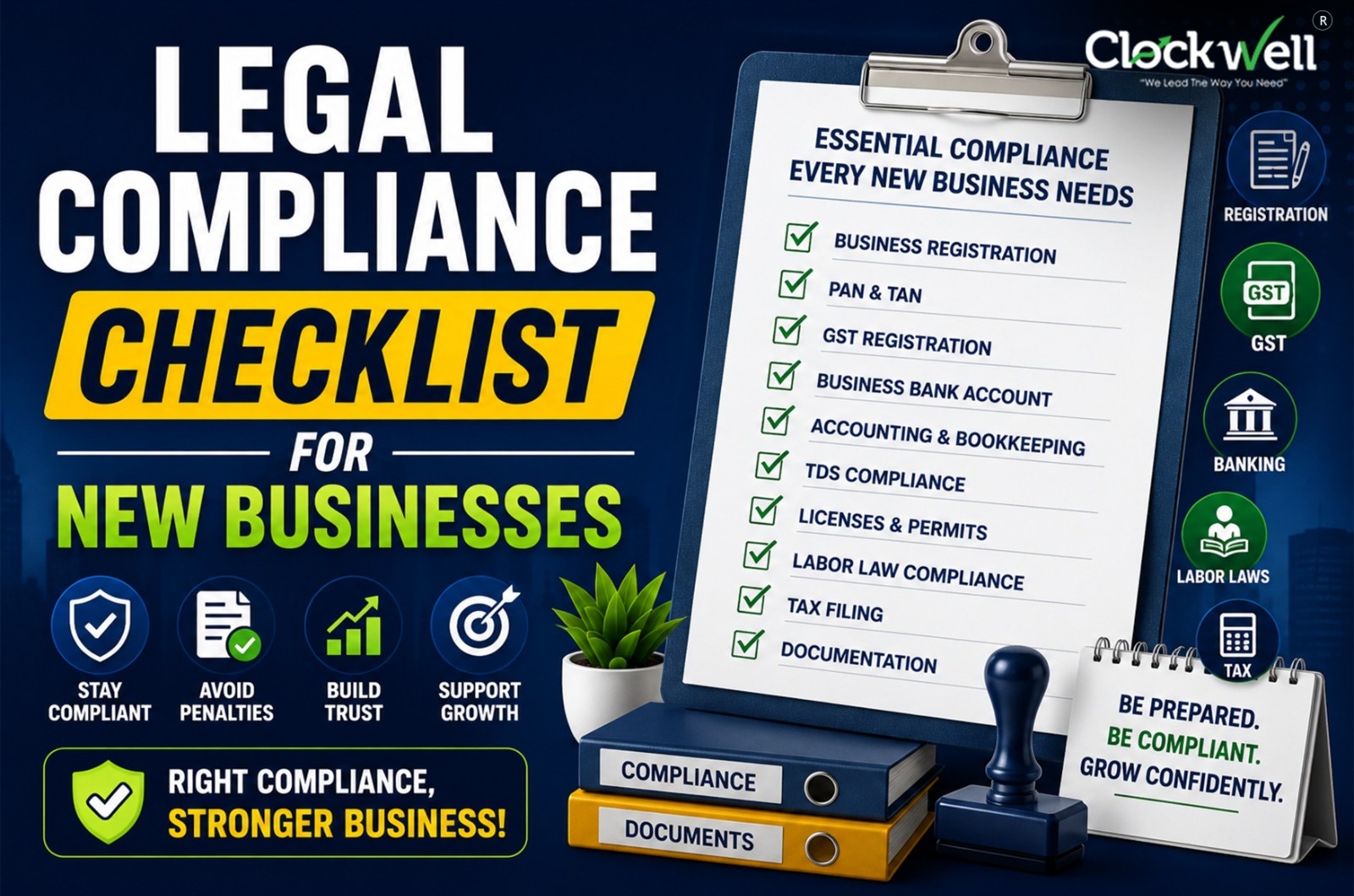
Starting a new business is exciting, but ensuring legal compliance from day one is equally important. Many startups and small businesses focus heavily on sales and operations while overlooking regulatory requirements. This can lead to penalties, notices, and unnecessary legal complications.
A proper legal compliance checklist helps businesses stay compliant, build credibility, and create a strong foundation for growth.
This guide outlines the essential legal requirements every new business should consider.
Why Legal Compliance Matters
Compliance is not just about avoiding penalties. It helps businesses:
- Operate legally
- Build trust with customers and investors
- Avoid financial penalties
- Improve business reputation
- Support long-term growth
Businesses that prioritize compliance are better positioned for success.
1. Choose the Right Business Structure
Selecting the appropriate business structure is the first compliance step.
Common Options:
- Sole Proprietorship
- Partnership Firm
- LLP (Limited Liability Partnership)
- Private Limited Company
- One Person Company (OPC)
Choose a structure based on your business goals, ownership, and growth plans.
2. Obtain Business Registration
Proper registration gives your business legal recognition.
Depending on the business type, registration may include:
- LLP Registration
- Private Limited Company Registration
- Partnership Registration
- MSME Registration
Business registration is the foundation of legal compliance.
3. Apply for PAN and TAN
Every business should obtain:
PAN (Permanent Account Number)
Required for taxation and financial transactions.
TAN (Tax Deduction and Collection Account Number)
Required if the business deducts TDS.
4. GST Registration
GST registration is mandatory if your business crosses the prescribed turnover limit or falls under specific categories.
Benefits:
- Legal tax compliance
- Input Tax Credit eligibility
- Improved business credibility
Ensure GST returns are filed on time.
5. Open a Business Bank Account
A separate business bank account helps:
- Track transactions
- Improve accounting accuracy
- Simplify audits
- Maintain transparency
Avoid mixing personal and business finances.
6. Maintain Proper Accounting Records
Accurate bookkeeping is essential.
Important Records:
- Sales invoices
- Purchase invoices
- Expense records
- Bank statements
- Financial reports
Good accounting supports tax compliance and business growth.
7. Comply With TDS Requirements
Businesses making specified payments may need to deduct TDS.
Common TDS Payments:
- Salaries
- Professional fees
- Contractor payments
- Rent
Timely deduction and filing are essential.
8. Obtain Necessary Licenses
Depending on the industry, businesses may require:
- Trade License
- FSSAI License
- Professional Tax Registration
- Import Export Code (IEC)
- Shop and Establishment Registration
Verify applicable licenses before operations begin.
9. Follow Labor Law Compliance
Businesses with employees must comply with labor laws.
Common Requirements:
- Employment agreements
- PF registration
- ESI registration
- Salary records
- Employee benefits compliance
Proper HR documentation is important.
10. File Tax Returns on Time
Timely tax filing helps avoid penalties and notices.
Important Filings:
- Income Tax Return
- GST Returns
- TDS Returns
- ROC Filings (for companies)
Maintain a compliance calendar to track deadlines.
11. Protect Business Contracts
Use written agreements for:
- Clients
- Vendors
- Employees
- Business partners
Proper contracts reduce legal disputes and misunderstandings.
12. Maintain Compliance Documentation
Keep all business records organized.
Documents to Maintain:
- Registration certificates
- Tax filings
- Licenses
- Invoices
- Financial statements
- Employee records
Proper documentation simplifies audits and inspections.
Common Compliance Mistakes New Businesses Make
- Delaying registrations
- Missing tax deadlines
- Poor bookkeeping
- Ignoring GST compliance
- Not obtaining required licenses
- Mixing personal and business finances
Avoiding these mistakes can save time and money.
Benefits of Staying Compliant
Businesses that maintain compliance enjoy:
- Better credibility
- Easier access to funding
- Lower legal risks
- Improved operational efficiency
- Stronger growth opportunities
Compliance is an investment in business success.
How Clockwell Can Help
Clockwell provides:
- Company registration services
- GST registration and filing
- Accounting and bookkeeping
- TDS compliance support
- Business advisory services
- Compliance management solutions
Our experts help new businesses stay compliant and focus on growth.
Following a legal compliance checklist for new businesses is essential for building a strong and sustainable company. From registration and taxation to accounting and labor law compliance, every requirement plays a crucial role in business success.
Starting with the right compliance practices today can help you avoid costly problems and create a solid foundation for future growth.
Published on June 12, 2026