
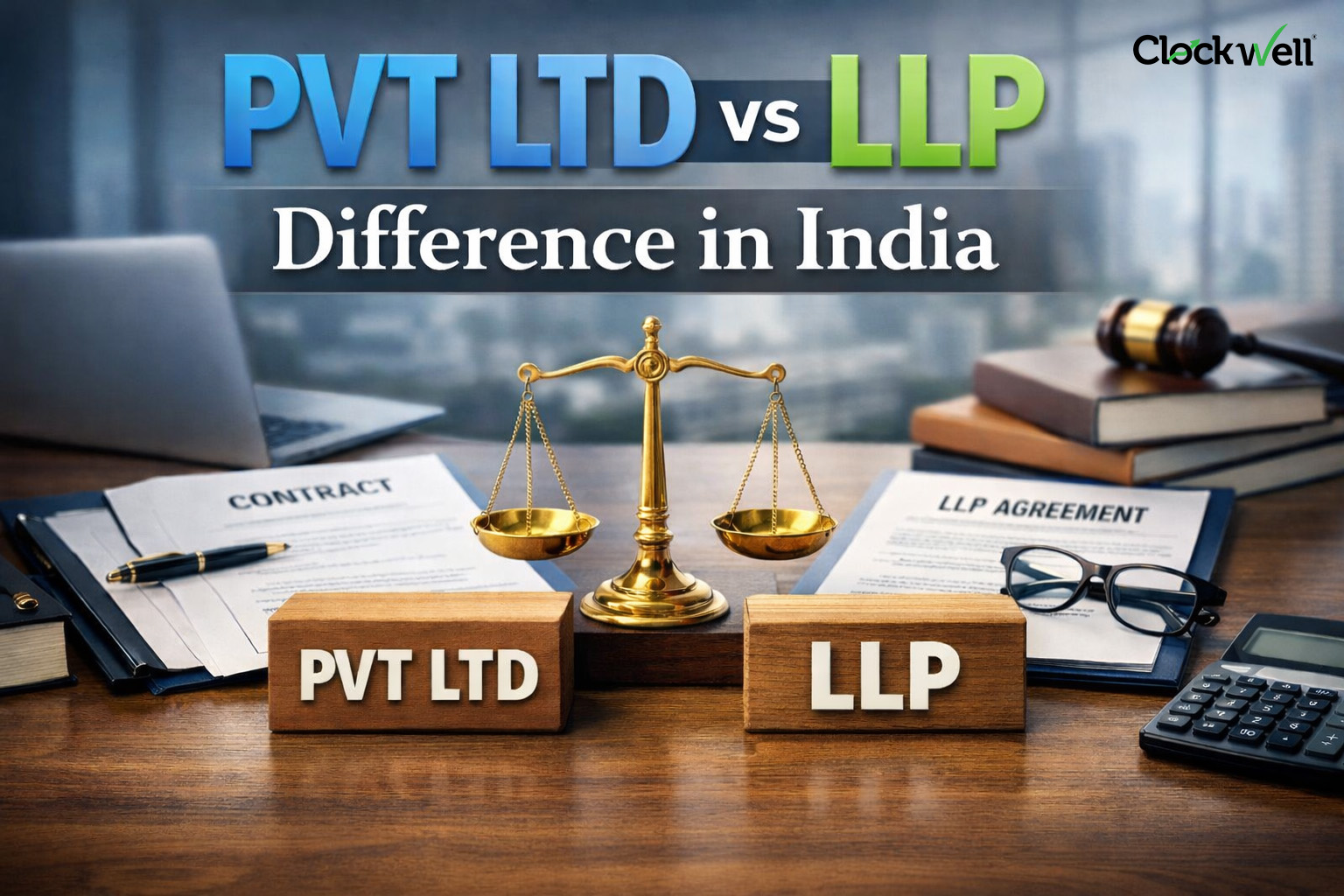
Starting a business is exciting — but choosing the right business structure is one of the most important decisions you’ll make. Many entrepreneurs get confused when comparing Private Limited Company and Limited Liability Partnership.
In this guide, we’ll clearly explain the PVT LTD vs LLP difference in India so you can confidently choose the right structure for your business.
What is a Private Limited Company (PVT LTD)?
A Private Limited Company is a company registered under the Companies Act, 2013. It is a separate legal entity from its owners.
Key Features:
-
Separate legal identity
-
Limited liability protection
-
Minimum 2 directors & 2 shareholders
-
Mandatory compliance requirements
-
Easy to raise funding from investors
PVT LTD companies are ideal for startups planning to raise venture capital or scale quickly.
What is an LLP (Limited Liability Partnership)?
A Limited Liability Partnership (LLP) is a hybrid structure combining features of a partnership and a company. It is governed by the LLP Act, 2008.
Key Features:
-
Limited liability for partners
-
Less compliance compared to PVT LTD
-
Minimum 2 partners required
-
No requirement for minimum capital
-
Suitable for small & medium businesses
LLP is popular among professionals, consultants, and small business owners.
PVT LTD vs LLP Difference in India (Detailed Comparison)
| Feature | PVT LTD | LLP |
|---|---|---|
| Governing Law | Companies Act, 2013 | LLP Act, 2008 |
| Legal Status | Separate legal entity | Separate legal entity |
| Liability | Limited to shares | Limited to contribution |
| Compliance | High | Moderate |
| Audit Requirement | Mandatory (with conditions) | Mandatory if turnover exceeds limit |
| Funding | Easy to raise equity | Difficult to raise VC funding |
| Ownership Transfer | Easy | Restricted |
Understanding the PVT LTD vs LLP difference in India helps you avoid future legal and financial complications.
Taxation Difference Between PVT LTD and LLP
Tax structure is one of the major deciding factors in the PVT LTD vs LLP difference in India.
PVT LTD Taxation:
-
Corporate tax applicable
-
Dividend distribution taxable
-
Eligible for startup benefits (if registered under DPIIT)
LLP Taxation:
-
Flat income tax rate
-
No dividend distribution tax
-
Profit sharing is tax-free in partners’ hands
If tax efficiency is your primary concern, LLP may offer advantages depending on your revenue structure.
Compliance Requirements Comparison
When analyzing the PVT LTD vs LLP difference in India, compliance burden plays a major role.
PVT LTD Compliance:
-
Board meetings
-
Annual ROC filing
-
Statutory audit
-
Annual return filing
LLP Compliance:
-
Annual return filing
-
Statement of accounts
-
Audit only if turnover exceeds prescribed limit
LLP generally has lower compliance costs compared to PVT LTD.
Which is Better for Startups?
The answer depends on your business goals.
Choose PVT LTD if:
-
You want to raise investor funding
-
You plan to scale rapidly
-
You want better brand credibility
Choose LLP if:
-
You want low compliance
-
You are starting a small business
-
You are running a professional service firm
Carefully evaluating the PVT LTD vs LLP difference in India will help you align your business structure with long-term goals.
Both structures offer limited liability and legal recognition. However, the right choice depends on your funding needs, compliance tolerance, and growth vision.
At Clockwell, we help entrepreneurs choose the right structure and handle complete registration, compliance, and advisory services.
If you are still confused about the PVT LTD vs LLP difference in India, our experts are ready to guide you step-by-step.
Published on February 21, 2026